
Introduction
In 2025, brands can no longer rely on generic marketing campaigns or basic personalization to engage customers. Today’s consumers expect messages, product recommendations, and experiences tailored to their individual needs, preferences, and behaviors. This shift has given rise to hyper-personalization, a strategy that leverages AI, machine learning, and customer data to create deeply personal customer journeys, driving engagement, loyalty, and conversions.
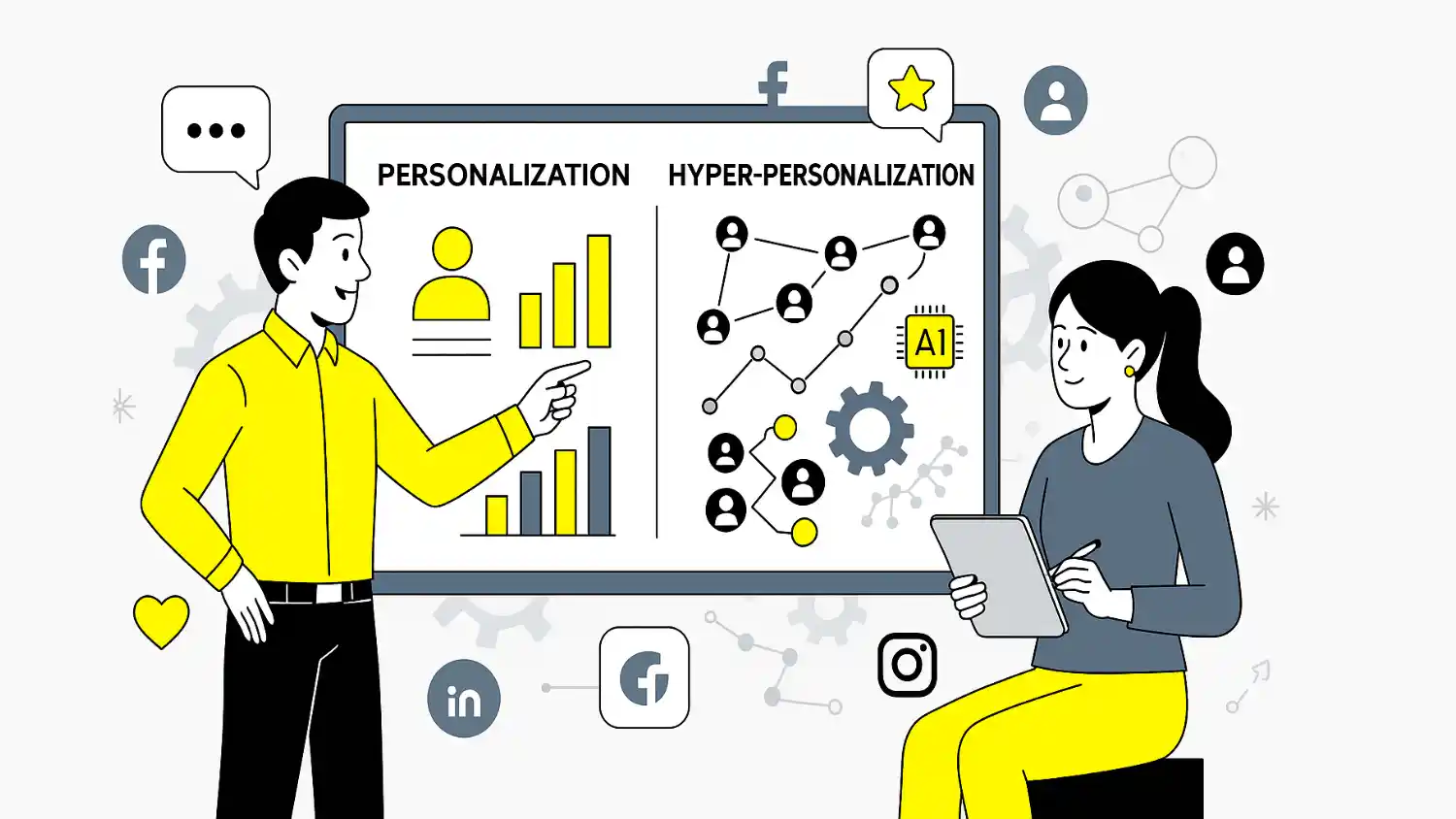
Understanding the Difference: Personalization vs. Hyper-Personalization
Traditional personalization often includes basic segmentation, like addressing customers by name or sending emails based on broad demographics. While this approach adds a personal touch, it only scratches the surface of what consumers expect today.
Hyper-personalization, on the other hand, uses real-time data and predictive analytics to anticipate a customer’s needs, preferences, and behaviors. It delivers highly relevant content, product recommendations, and offers at the right moment in the customer journey. Instead of generic segments, each customer is treated as a unique individual, enhancing the overall experience and increasing the likelihood of engagement and conversion.
How AI and Data Enable Hyper-Personalization
Artificial Intelligence (AI) plays a crucial role in hyper-personalized marketing. By analyzing vast amounts of customer data—from browsing behavior and purchase history to social media interactions—AI can predict what a customer is likely to want or need next. Machine learning algorithms refine these predictions over time, allowing brands to continuously improve the relevance of their messaging.
Customer Data Platforms (CDPs) and analytics tools help consolidate information from multiple touchpoints, creating a 360-degree view of each customer. This unified data allows brands to orchestrate experiences across channels, whether it’s personalized email campaigns, product recommendations on e-commerce platforms, or targeted ads on social media.
Benefits of Hyper-Personalization
Hyper-personalization offers several advantages for brands looking to stand out in 2025:
- Enhanced Customer Engagement: By delivering content and offers that resonate on an individual level, brands can capture attention in an increasingly distracted digital landscape.
- Increased Conversions: Personalized recommendations and timely messaging can significantly boost purchase intent and reduce cart abandonment.
- Stronger Customer Loyalty: Customers are more likely to stay loyal to brands that understand and anticipate their needs.
- Optimized Marketing Spend: By targeting the right message to the right person at the right time, brands reduce wasted spend and maximize ROI.
Strategies for Implementing Hyper-Personalization
Brands can take several steps to implement hyper-personalized marketing successfully:
1. Collect and Consolidate Customer Data
Start by gathering data from all customer touchpoints, including website interactions, mobile apps, email campaigns, social media, and offline channels. Use a Customer Data Platform (CDP) to unify this information and create detailed customer profiles.
2. Leverage AI and Predictive Analytics
AI tools can identify patterns, predict behavior, and recommend next-best actions. For example, an e-commerce platform can use AI to suggest products based on a customer’s browsing history and purchase behavior, increasing the chances of conversion.
3. Personalize Across Channels
Hyper-personalization is most effective when applied across multiple channels. Emails, push notifications, social media ads, and website content should all reflect the customer’s preferences and interactions with the brand.
4. Use Real-Time Data
Real-time personalization ensures that customers receive relevant messages and offers at the right moment. For example, if a customer abandons a cart, a real-time reminder with a personalized discount can encourage them to complete the purchase.
5. Encourage Feedback and Interaction
Collecting feedback and monitoring customer behavior allows brands to continuously refine personalization strategies. Surveys, reviews, and engagement metrics provide valuable insights for improving recommendations and messaging.
Examples of Hyper-Personalization in Action
Several brands are already leading the way with hyper-personalization:
- Netflix uses AI to recommend shows and movies based on individual viewing habits, creating a unique experience for every user.
- Amazon provides personalized product recommendations and offers in real-time, driving high conversion rates.
- Spotify curates playlists tailored to individual listening preferences, keeping users engaged and loyal.
These examples demonstrate that hyper-personalization is not just a trend—it’s a strategic necessity for brands that want to thrive in today’s competitive digital landscape.
Challenges to Consider
While hyper-personalization offers numerous benefits, brands must be mindful of potential challenges:
- Data Privacy: Collecting and using personal data requires strict compliance with privacy regulations like GDPR and CCPA.
- Data Quality: Poor-quality or fragmented data can undermine personalization efforts.
- Over-Personalization: Bombarding customers with overly targeted messages can feel intrusive, so balance and relevance are key.
Conclusion
The shift from personalization to hyper-personalization represents the next big marketing evolution. By leveraging AI, predictive analytics, and unified customer data, brands can create highly individualized customer journeys that drive engagement, loyalty, and conversions. In 2025, brands that embrace hyper-personalization will not only stand out in a crowded digital landscape but also build lasting relationships with their customers, turning insights into meaningful actions.