Table of Contents
Summary
Long form content isn’t losing to short answers, search has simply split into two different competitions. AI systems like Google AI Overviews, ChatGPT, and Perplexity now extract short, direct sentences to build instant answers, while long form content still earns the backlinks and citations that build lasting authority. This blog breaks down the real difference between getting extracted and getting cited, backed by expert opinion, real case studies, and current data on referring domains and content depth. It offers a simple decision framework for choosing short or long form based on query type, along with a practical approach for small brands with limited resources to structure one page that wins both the instant AI answer and long term trust.
Key Takeaways:
- Long form content isn’t dying. The average Google first page result still runs around 1,447 words, and long form pages continue to earn significantly more referring domains and backlinks
- AI search systems extract passages, not pages. Short, direct answers win the instant AI response, while long form content wins citation, trust, and authority
- Extraction and citation are two different wins. Optimizing for only one, without realizing the other exists, is why many content strategies feel like they are working and failing at the same time
- Definition and quick fact queries perform better as short, direct content, while comparison, how to, and competitive topics need long form depth
- The strongest content structure combines both formats on a single page, opening each section with a short, extractable answer followed by deeper explanation and data
- Small brands with limited resources should prioritize fewer, deeper long form pieces structured with short answers built in, rather than splitting effort across many thin short posts
Introduction
Last reviewed August 2026
Here is a fact that surprises most people. The average Google first page result today still runs around 1,447 words long. At the same time, AI Overviews now answer a huge share of searches using two or three sentences pulled from somewhere else entirely, often without the reader ever visiting the page those sentences came from. Both of these things are true at once, and that tension is exactly what this article is about.
This is not really a story about long form content dying. It is a story about search splitting into two separate competitions, and most brands are only playing one of them without realizing it. In this article, we will break down what is actually changing, explain the real difference between getting extracted and getting cited, share what experts, real case studies, and our own team at COCO have observed, and give you a simple, practical way to decide when to write short and when to write long.
What Is Actually Changing in Search
This is not really a word count debate, even though it often gets framed that way. AI search systems like Google AI Overviews, ChatGPT, and Perplexity are not ranking entire pages the way traditional search used to. Instead, they are pulling out specific passages, sentences, and paragraphs to build an answer directly inside the search results.
According to AI SEO Shift’s breakdown of how AI search evaluates content, when AI systems like ChatGPT, Perplexity, or Google AI Overviews construct an answer, they are not ranking pages, they are extracting text, and the real unit of value is not the page, it is the passage, the paragraph, the sentence that directly answers the question.
This one idea changes how you should think about every piece of content you write. You are no longer competing page against page. You are competing sentence against sentence.
Extraction Versus Citation, the Difference Nobody Explains Clearly
This is the part that gets lost in most conversations about content length, so let us break it down simply.
Extraction is when an AI system pulls a short, direct answer from your content and uses it inside its own summary, often without sending the reader to your website at all.
Citation is when your page earns an actual visible source link that people can click through to read more.
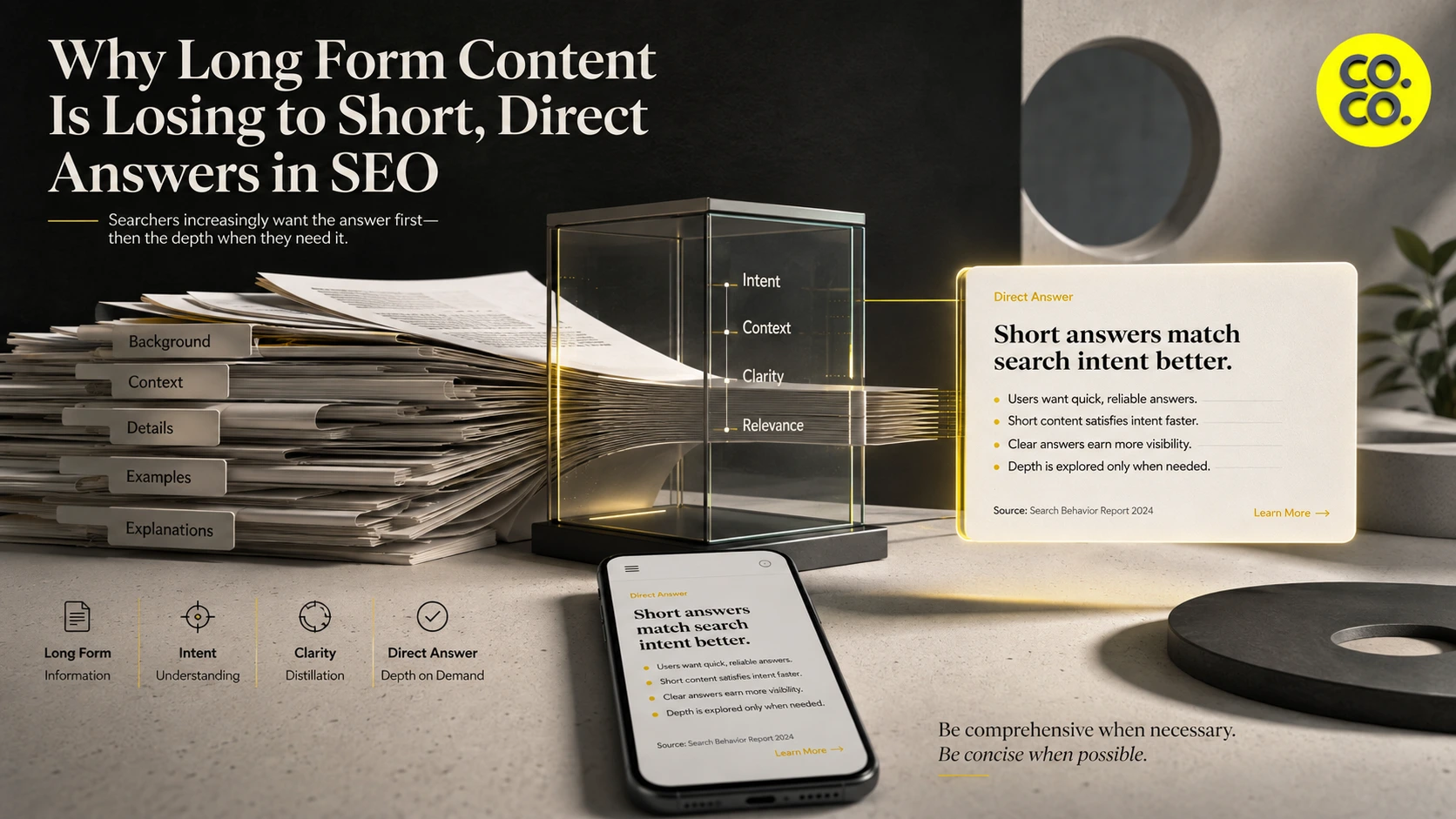
Short, direct content tends to win extraction because it is easy for AI to lift cleanly. But research from AI SEO Shift on content length and AI citations found that short direct answers get extracted first, while long form pages still get cited more overall. These are two completely different wins. One gets your words used. The other gets your website visited.
Most brands only optimize for one of these without realizing the other exists, which is exactly why so many content strategies feel like they are working and failing at the same time.
According to COCO, this is the single biggest misunderstanding we see when a new client comes to us confused about why their content gets AI visibility but no real traffic. They usually built for extraction and never realized citation needed a different kind of depth entirely.
Why Short, Direct Answers Are Winning the First Moment

For certain kinds of questions, short content genuinely performs better. As explained in Keen Insites’ analysis of short form content and AI Overviews, AI powered search is focusing less on length and more on structure and usefulness, so content that answers a question quickly and effectively has a strong chance of being used, no matter its word count.
This tends to happen most with simple, factual queries. Questions like what is technical SEO, how long should a blog title be, or what does CTR mean are usually answered in a sentence or two, and that is exactly the length AI systems prefer to extract. Short content also performs better with mobile users who are scanning quickly and want an immediate answer rather than scrolling through paragraphs.
Why Long Form Content Still Wins Where It Matters Most
Even with all this AI extraction happening, long form content has not lost its power, it has just changed why it wins. According to SEO Guru Atlanta’s 2026 content performance data, content of 2,000 or more words earns significantly more referring domains, which fuels the authority signals search engines rely on to rank pages.
Here is the part almost nobody explains clearly. Other websites do not link to a two sentence answer. Nobody references a quick fact as a resource. Websites link to genuine, comprehensive guides because that is what feels worth pointing readers toward. So while short content wins the instant answer, long form content is what actually earns the backlinks and trust that build authority over time.
This is why complex or high stakes industries still lean heavily on long form. As Bracha Designs points out in their analysis of AI search behavior, Google’s emphasis on E-E-A-T is a direct signal that comprehensive, well researched content is highly valued, and for industries where complex information is common, such as healthcare, finance, or highly technical fields, long form content is non-negotiable.
What COCO thinks here is simple. Word count was never really the point, depth was. A short page can be well written and still say very little, while a genuinely useful long page earns trust precisely because it took the time to actually explain something properly.
A Real Case Study, Two Formats on One Page
The team at Devenup put this exact debate to the test across real client work, and their conclusion is worth paying attention to. After running through every angle, their honest conclusion was that neither format wins on its own, short form builds reach and recognition, long form builds trust and rankings, and the brands outperforming their competitors in 2026 are not choosing between the two, they are deploying both with intention.
In practice, this looks like a single page doing double duty. A section opens with a tight, two or three line direct answer written specifically so an AI system can lift it cleanly. Right underneath that, the same section continues with deeper explanation, real data, and specific examples. This structure lets one page compete for the instant AI answer and the deeper, trusted resource link at the same time, instead of forcing a choice between the two.
We have used this same structure while building content for our own clients at COCO. When we wrote a piece explaining a technical service in simple terms for a client, we opened each section with a short, plain answer before going deeper into the details. That structure held both a strong AI Overview presence and steady organic traffic, proving both formats can genuinely live on the same page. According to COCO, this dual structure has quietly become one of the most requested changes we make when auditing an existing client blog, since most older content was written for one format only. You can see how we apply this thinking across our own blog as well.
A Simple Decision Framework, Short or Long
Instead of guessing every time you sit down to write, use this as a quick rule of thumb.
Definition and quick fact queries lean short. Think simple, direct questions someone wants answered in one glance.
Comparison, how to, and multi part queries lean long. These need space to walk through steps, weigh options, or explain nuance.
Competitive, high value topics almost always need long form, regardless of the query type, but should still include short, direct answers built into the structure so both formats are covered.
When you are unsure which way to go, default to long form with a short, clear answer sitting right at the top of each major section.
What This Means for Small Brands and Agencies
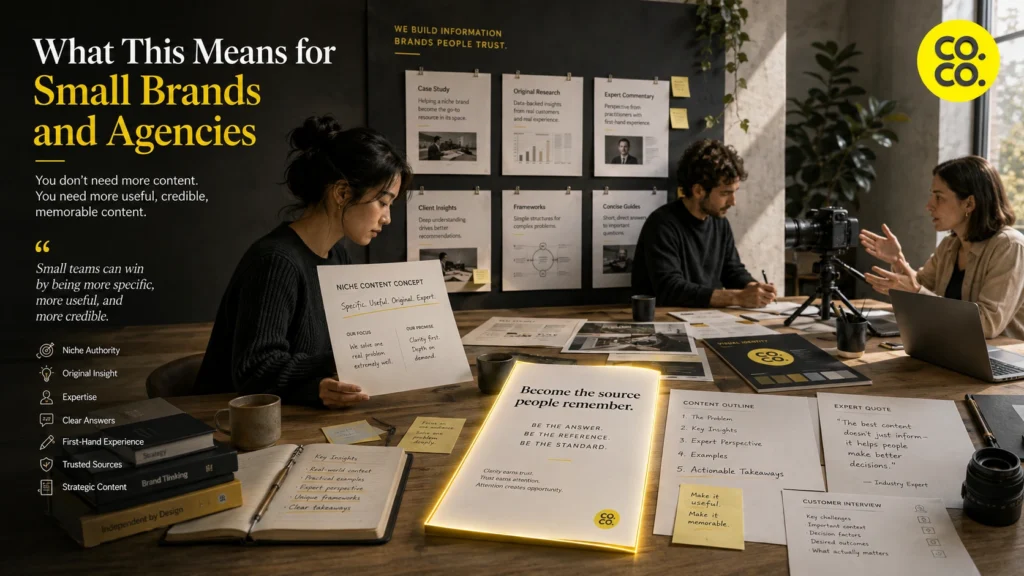
Most guidance on this topic assumes a large content team capable of producing both formats constantly. That is simply not realistic for most small brands or agencies working with limited time and budget.
If you can only publish one piece of content a week, prioritize fewer, deeper long form pieces, but structure them with short, extractable answers built directly into the format. This gives you a real shot at both AI extraction and long term citation from a single, well built page, instead of spreading thin effort across many shallow short posts that win neither.
You can also repurpose sections of your long form content into shorter standalone answers for FAQs, social posts, or quick reference material, rather than writing everything twice from scratch. This is exactly the kind of strategy our content marketing team at COCO builds for clients working with limited bandwidth.
Quick Checklist Before You Publish
Does each major section open with a short, direct, extractable answer.
Is the deeper explanation backed by real data, a named example, or an expert opinion.
Is the page long enough to genuinely function as a resource, not padded just to hit a number.
Does the structure use clear headings that make each answer easy to isolate on its own.
Would another website realistically want to link to this as a reference.
Frequently Asked Questions
Is long form content dead in 2026?
No. Long form content still earns significantly more referring domains and remains essential for competitive and complex topics. What has changed is that short, direct answers now win the instant AI response, while long form wins trust, depth, and citations.
Does word count directly affect rankings?
Not directly. Word count is really a proxy for depth, and depth is what search engines and AI systems are actually evaluating. A shorter page with dense, original evidence can outperform a much longer page full of padding.
What length should a blog post be for AI search visibility?
There is no single fixed number. The strongest approach uses short, clear answers inside a longer, well structured page, so the content can win both extraction and citation.
Can short form content earn backlinks?
It can, but less often than long form. Short content tends to get used and extracted rather than linked to, since most websites reference it in passing rather than pointing readers toward it as a resource.
Should every page include both a short answer and long form depth?
For most competitive or informational topics, yes. This structure gives your content the best chance of being pulled into an AI answer while also earning the trust and links that come from genuine depth.
Final Takeaway
This was never really a battle between long and short form content. Short, direct answers win the instant AI response. Long form content wins the trust, the depth, and the click that follows. The strongest content in 2026 does not choose one over the other, it builds both into the same page with intention.
According to COCO, the brands that will win the next few years of search are not the ones obsessing over word count, they are the ones willing to structure content properly for both a machine reading it in a second and a human reading it for ten minutes.
If you want help structuring your content to win both the instant answer and the long term ranking, our team at COCO builds content marketing strategies designed exactly for how people and AI systems search today. You can read more of our thinking on our blog, including our earlier piece on how Google’s Search Generative Experience affects your website, or get in touch with our team to see how we can help your brand stay visible as search keeps evolving.